
From Grid to Grid: Financing the future of Motorsport
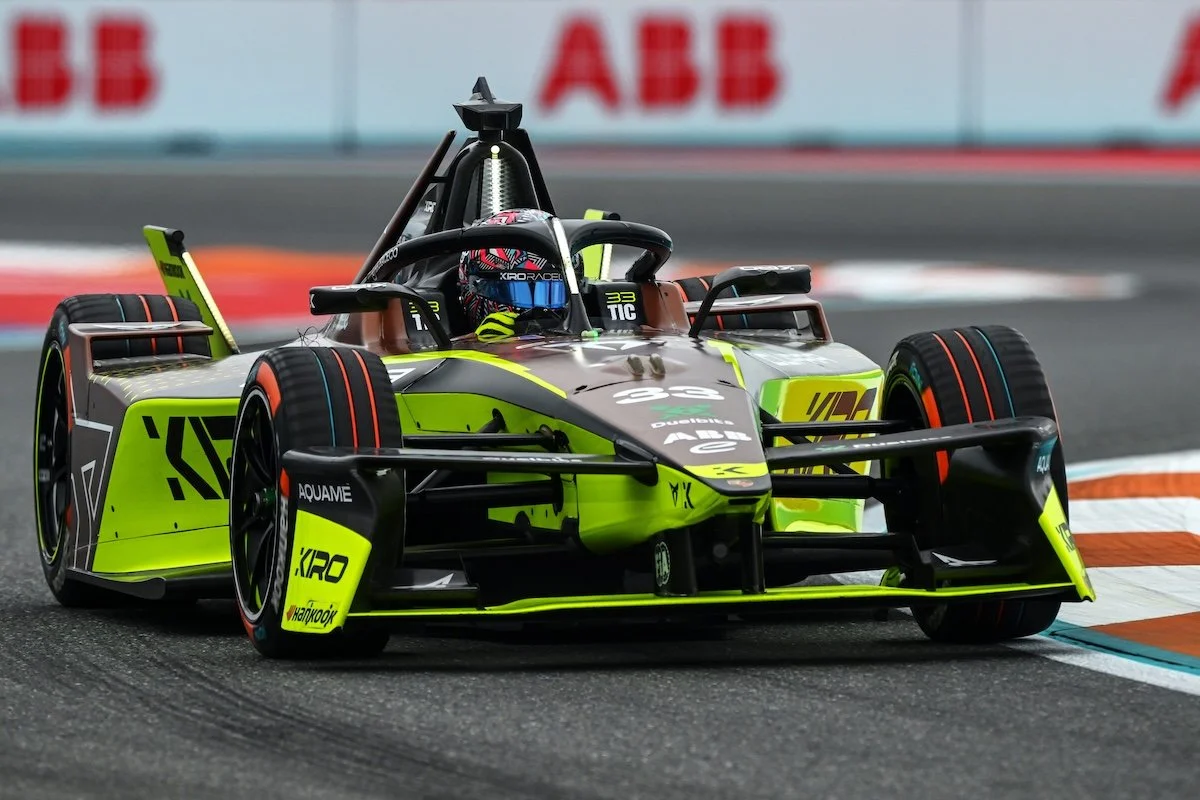
Following the recent launch of CenterNode, a new energy platform from The Forest Road Company backed by up to $750 million in institutional capital, Kiro Race Co is highlighting the growing connection between global energy investment and the future of electric motorsport.
As part of The Forest Road Company’s portfolio, Kiro Race Co sits within a broader ecosystem actively investing in renewable infrastructure – a shift that is not only reshaping electrification but also influencing the evolution of Formula E itself.
In this Q&A, Seth Zeleznik, Founder & CEO of CenterNode Group shares his perspective on how increasing capital deployment across energy, infrastructure, and mobility is shaping motorsport, and just what it means for Formula E, its partners, and those looking to engage with the next phase of the transition.
Q: There’s been significant attention on fresh investment flowing into energy infrastructure. Why does this matter to motorsport?
“What we’re currently seeing is a reflection of where the global economy is currently heading, and it stems far beyond individual announcements. Large pools of institutional capital are increasingly being directed towards energy infrastructure, particularly in areas like solar and grid modernisation, and it’s a shift that’s directly relevant to Kiro Race Co and the wider Formula E ecosystem. The Forest Road Company, which is a part of Kiro Race Co's ownership group, is actively investing in the energy infrastructure space, including through the recent launch of its dedicated energy platform, CenterNode, which is targeting up to $750 million in capital commitments from institutional investors. CenterNode provides a clear case study as to how capital is being directed into the infrastructure that will underpin electrification in the future. This has a direct bearing on motorsport, especially on championships like Formula E, which were built with the same underlying transition in mind. Whenever we see significant capital being deployed into energy systems, it reinforces that what we’re seeing isn’t a niche shift but is, instead, a systemic one. Motorsport doesn’t exist in isolation from that, and nor should it. It’s part of the same broader ecosystem, and for partners, that ecosystem is becoming increasing relevant as a space for long-term alignment.”
Q: Are we seeing a broader shift in where institutional capital is being deployed?
“I think it’s very clear that we are. The transition from non-renewable to renewable and clean energy has entered a phase that is both capital-intensive and infrastructure led. For quite a long time, the conversation around clean energy and electrification was primarily being driven by ambitions that were based on targets, policy, and early innovation, but now, it’s about execution. That execution requires not only capital at scale, but capital that, first and foremost, understands the complexity of infrastructure. For us, and for potential partners looking at Formula E and the wider championship platform, that maturity matters because it creates a much more investable, interconnected environment around energy, mobility, and technology.”
Q: How does investment in energy infrastructure translate into a real-world impact?
“This is the difference between intent, and reality. When you invest in battery storage, distribution networks, or in CenterNode’s case, solar generation and infrastructure, you’re building what will be the physical backbone of electrification. It is that backbone that enables everything else, from reliable power supply and scalable charging infrastructure to widespread electric vehicle adoption. It’s easy to talk about electric mobility in isolation, but it only works at scale if the underlying energy system and infrastructure can sustainably support it. Energy is generated, stored, distributed, and consumed, and investing in energy infrastructure connects that entire chain together. For motorsport, and particularly Formula E, the chain is not theoretical – it’s the very environment we operate in and help to accelerate, and for partners, that connection between infrastructure and mobility is what makes this space strategically relevant, rather than purely symbolic.”
Q: Where does Formula E sit within the ecosystem?
“Formula E is positioned at a very interesting intersection. On one hand, it’s a global competitive sports and entertainment platform, but on another, it plays a key role in the broader electrification story. That means that Formula E is uniquely positioned at a point where technology, performance, and perception all converge. As a sporting product, it showcases what electric technology can do when pushed to its very limit and it brings that technology to global destinations and audiences in a visible and engaging way. The visibility that Formula E offers is of extreme importance because it instils confidence, improves desirability, and in certain cases, highlights real infrastructure integration through initiatives like Pit Boost. In that sense, Formula E complements the infrastructure being built elsewhere and increasingly, it is also becoming a platform where commercial partners can align themselves with that transition in a meaningful way.”
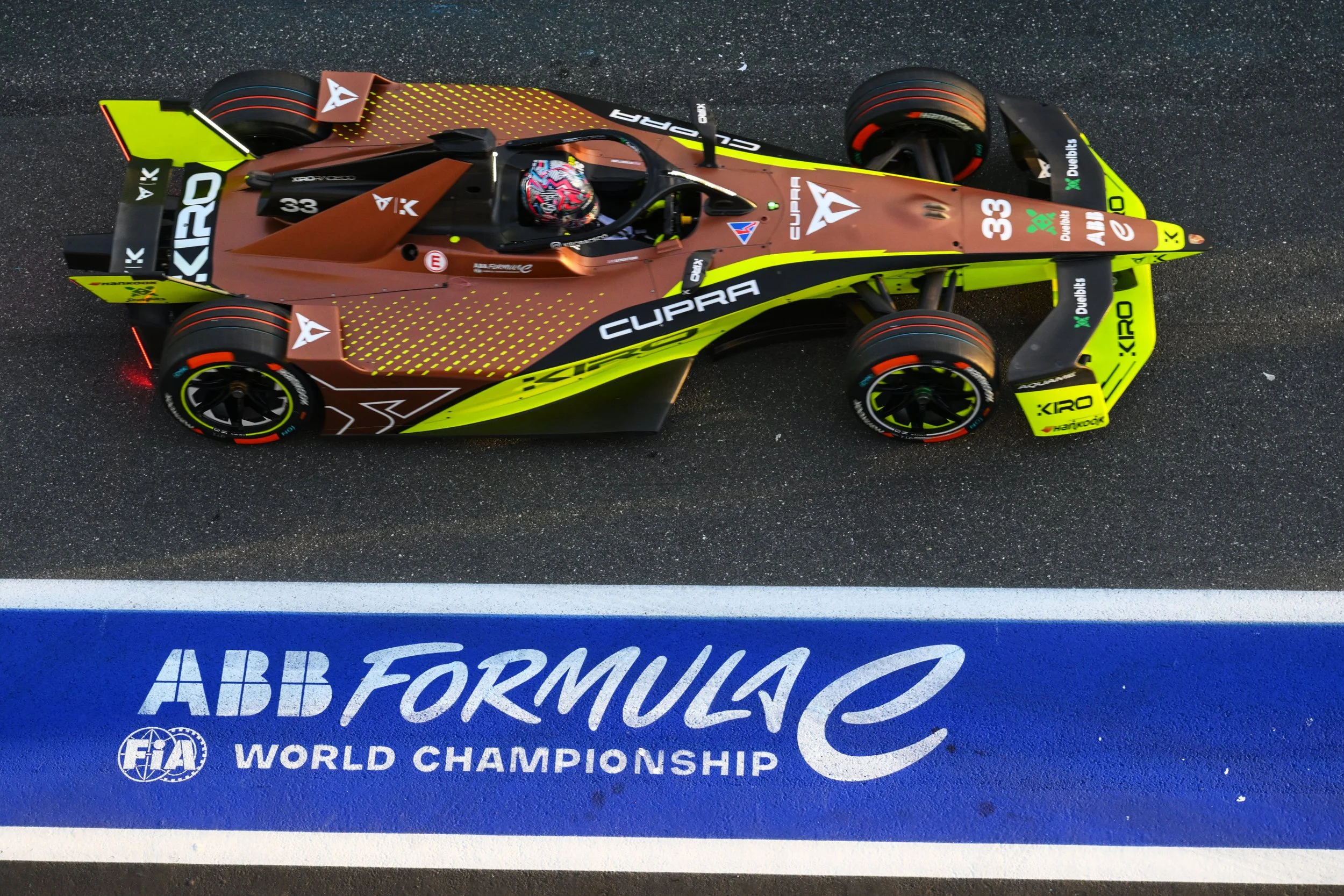
Q: How does Formula E actually influence the adoption of Electric Vehicles?
“Formula E accelerates development in a way that very few environments can. Teams are operating under extreme constraints including performance, efficiency, thermal management, and software optimisation, and are refining constantly. That continual development means that what might take years in a conventional development cycle can happen in a fraction of that time in a racing environment. This has a direct impact on road-relevant technology, and on-track improvements in areas such as energy efficiency, battery management, and power delivery often feed back into the wider EV ecosystem. Alongside that is perception. Performance changes how people think about electric vehicles, and crucially, it moves the conversation forward from sustainability, into capability. That combination of technical transfer and cultural shift is what makes the platform so powerful.”
Q: Why is performance still important in a conversation about sustainability?
“I think it’s because performance serves as proof. On its own, sustainability can sometimes feel quite abstract and even obligation driven. Performance makes it tangible. It demonstrates that electric technology is not only viable, but competitive and exciting and because of these things, desirable. If the goal is widespread adoption, the technology must be appealing on multiple levels. It has to be efficient, and it has to perform, and by showing that electrification translates to progression and not compromise, motorsport is validating the direction of travel in a way very few other environments can.”
Q: What does the next phase look like for Formula E?
“From my perspective, the next phase for Formula E is about scale and integration. As the wider energy ecosystem develops and more capital flows into infrastructure, including platforms like CenterNode, Formula E’s role will become more clearly defined. We are moving towards a more mature value chain that spans every generation through mobility and consumption. That creates an opportunity for Formula E to operate from a position of greater relevance, not just as a championship, but as part of the wider conversation around the future of energy and transport. For partners, that evolution is critical because it increases the strategic value of engagement within this space.”
Q: What does this mean for brands and partners who are looking at Formula E?
“It changes the context entirely. A partnership in Formula E isn’t just about having visibility in a sporting environment. Instead, it’s about aligning with a much broader structural shift that’s happening across energy, infrastructure, and mobility. For brands, that means the chance to engage with a platform that connects innovation with real-world investment and application. With developments like CenterNode emerging, it only reinforces that this is not an abstract narrative – it’s backed by active capital deployment into the systems that will define the next phase of electrification. For potential partners, it is a very rare opportunity to be part of a network that extends beyond traditional marketing and instead, sits directly at the intersection of sport, technology, and transformation.”
Double-click to edit...